
Ready for a challenge?
Innovation Challenge for Students in Dingolfing/Landau
Ready for a challenge in the high-tech hub of Dingolfing-Landau? Join our innovation challenge and tackle real-world problems in the fields of lean, green and digital. Collaborate with an interdisciplinary team to develop practical and innovative solutions for companies, cities and regional partners. Expect exciting insights into the Ecosystem Smart Niederbayern, valuable networking opportunities and the chance to present your idea.
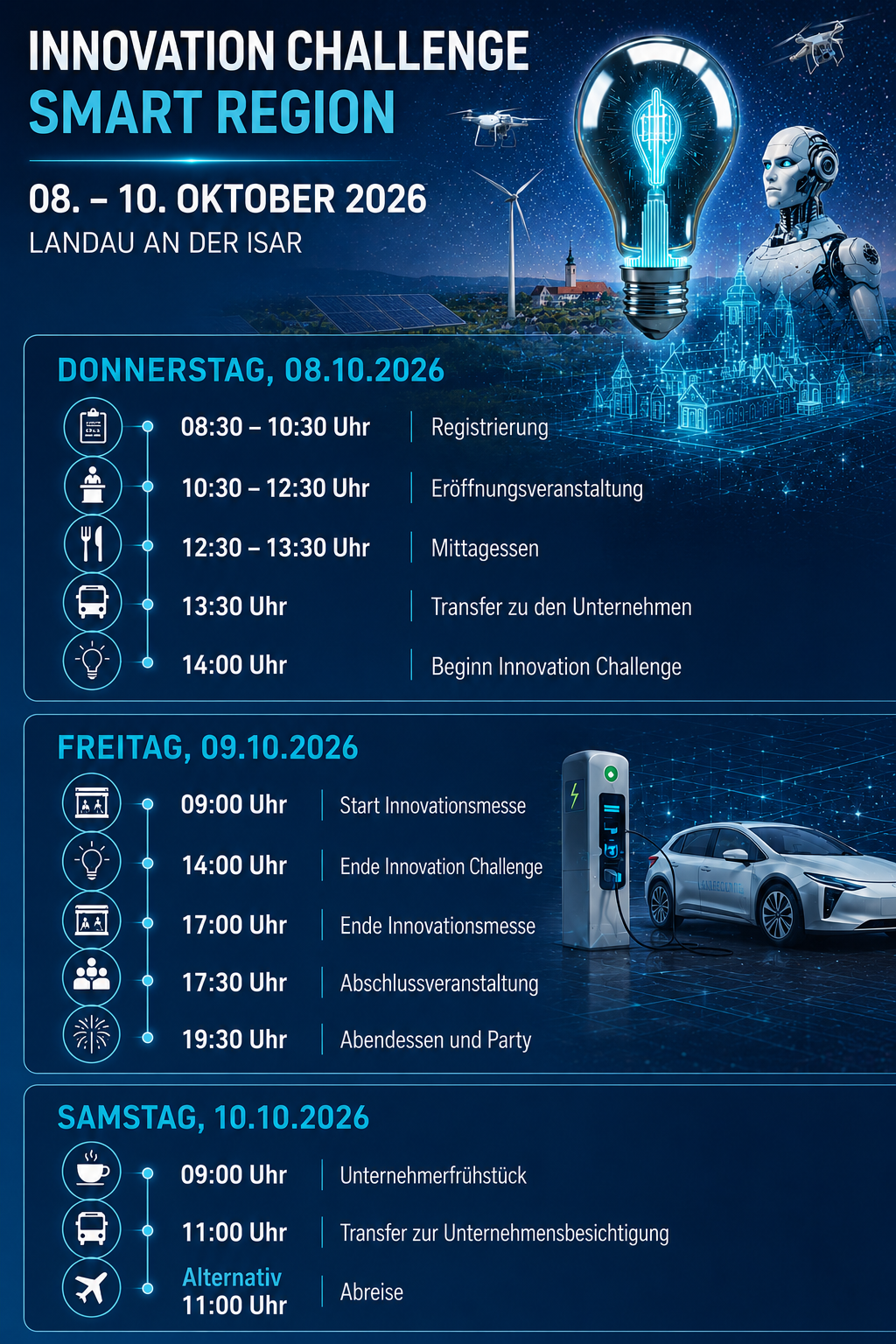
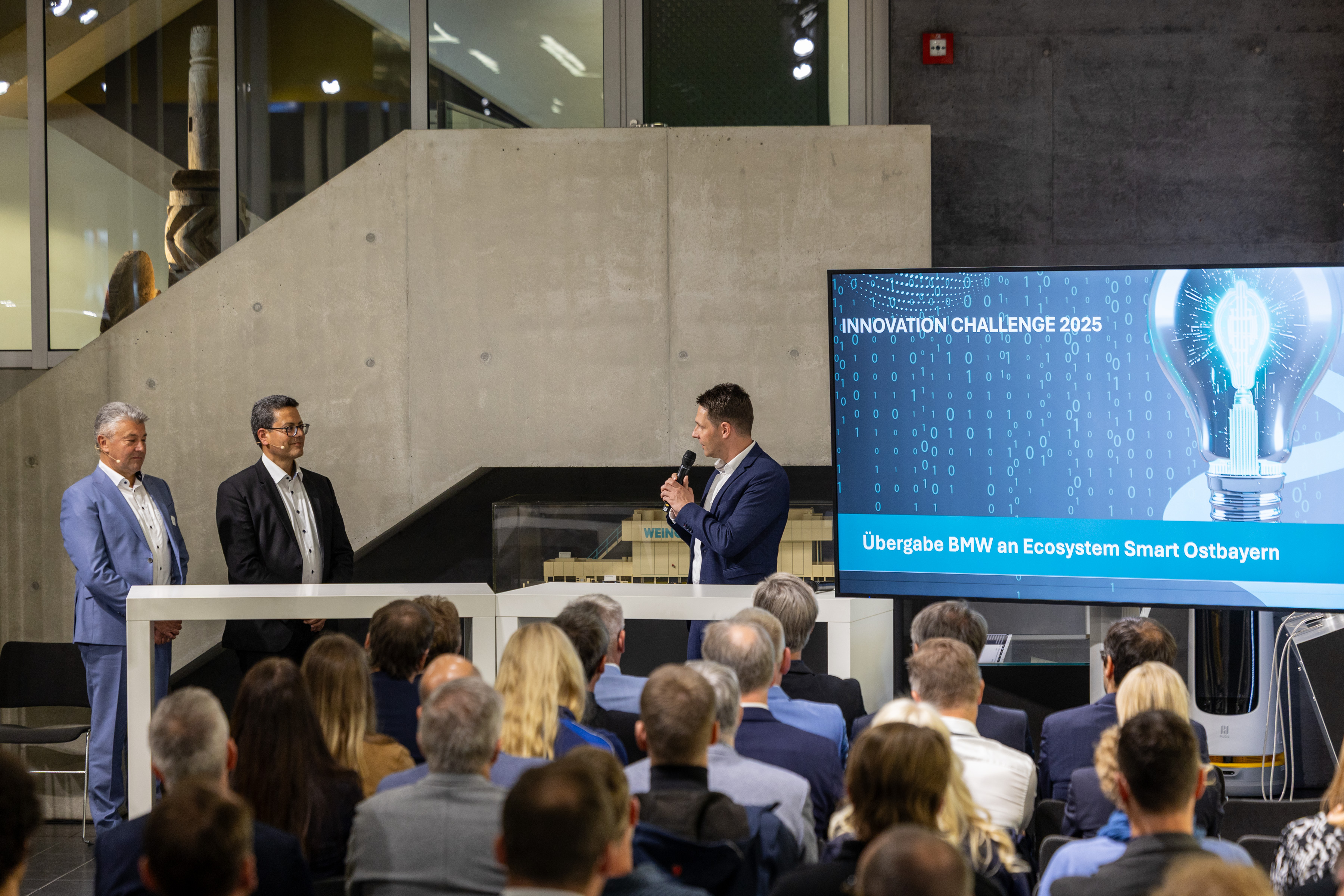
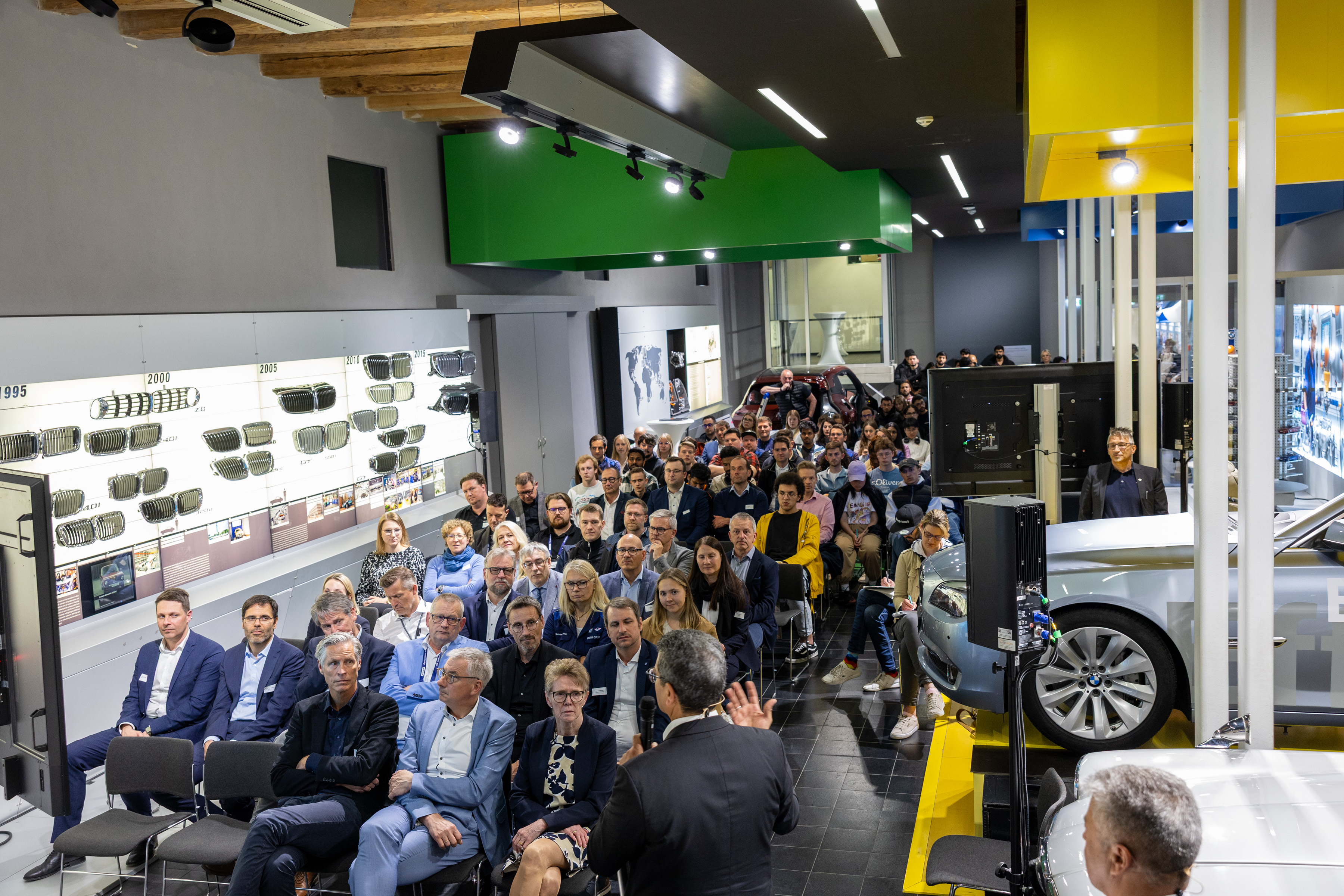
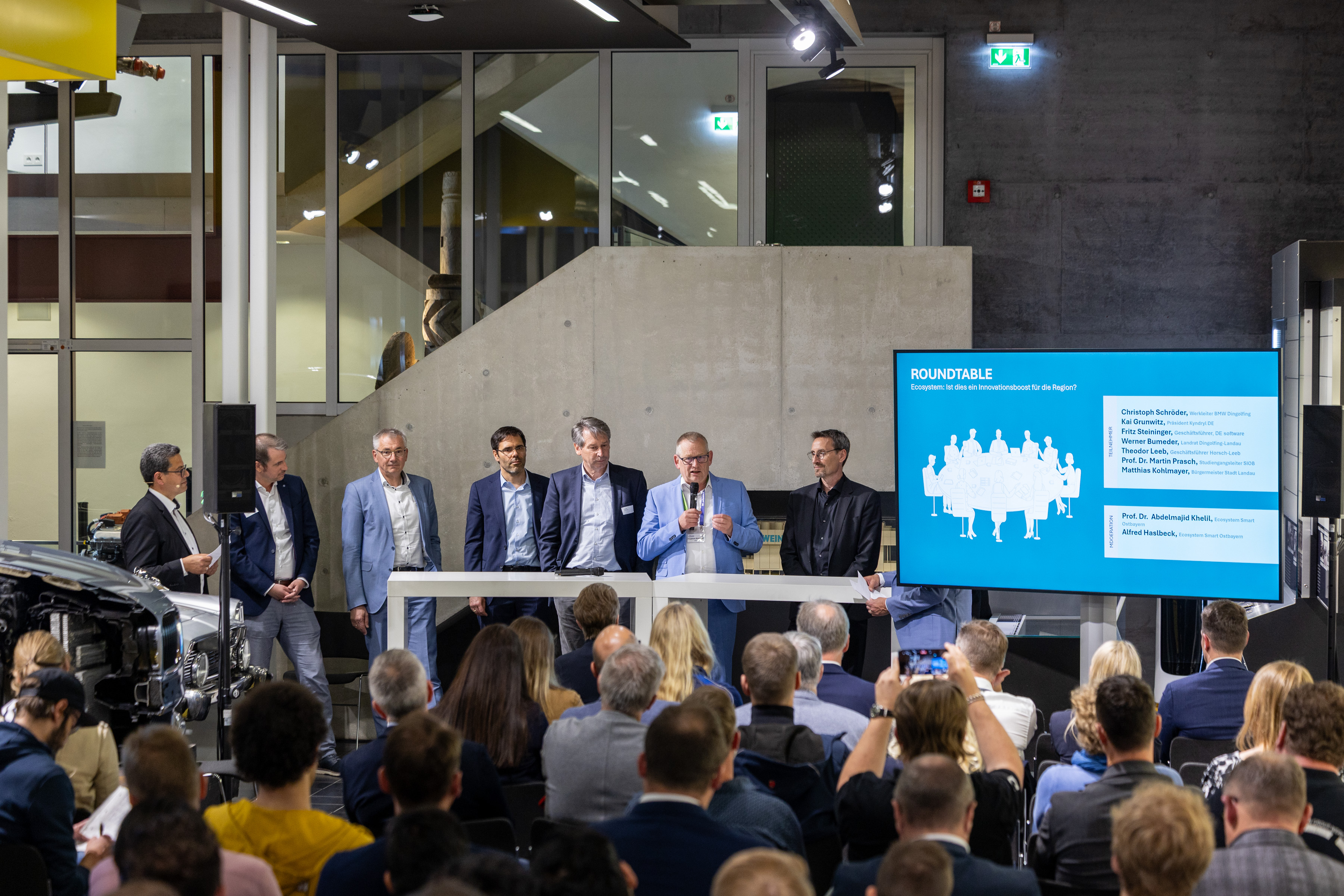
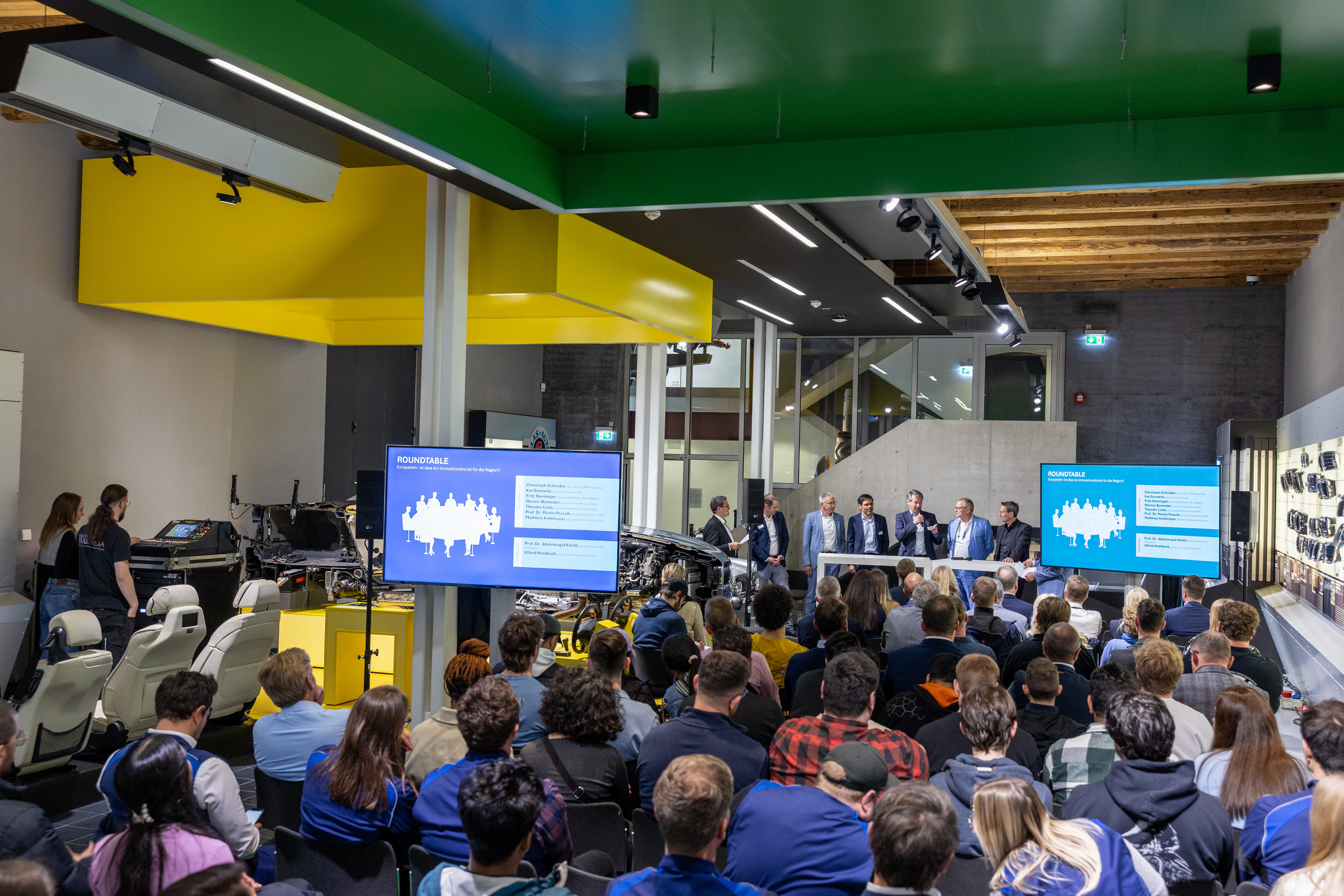
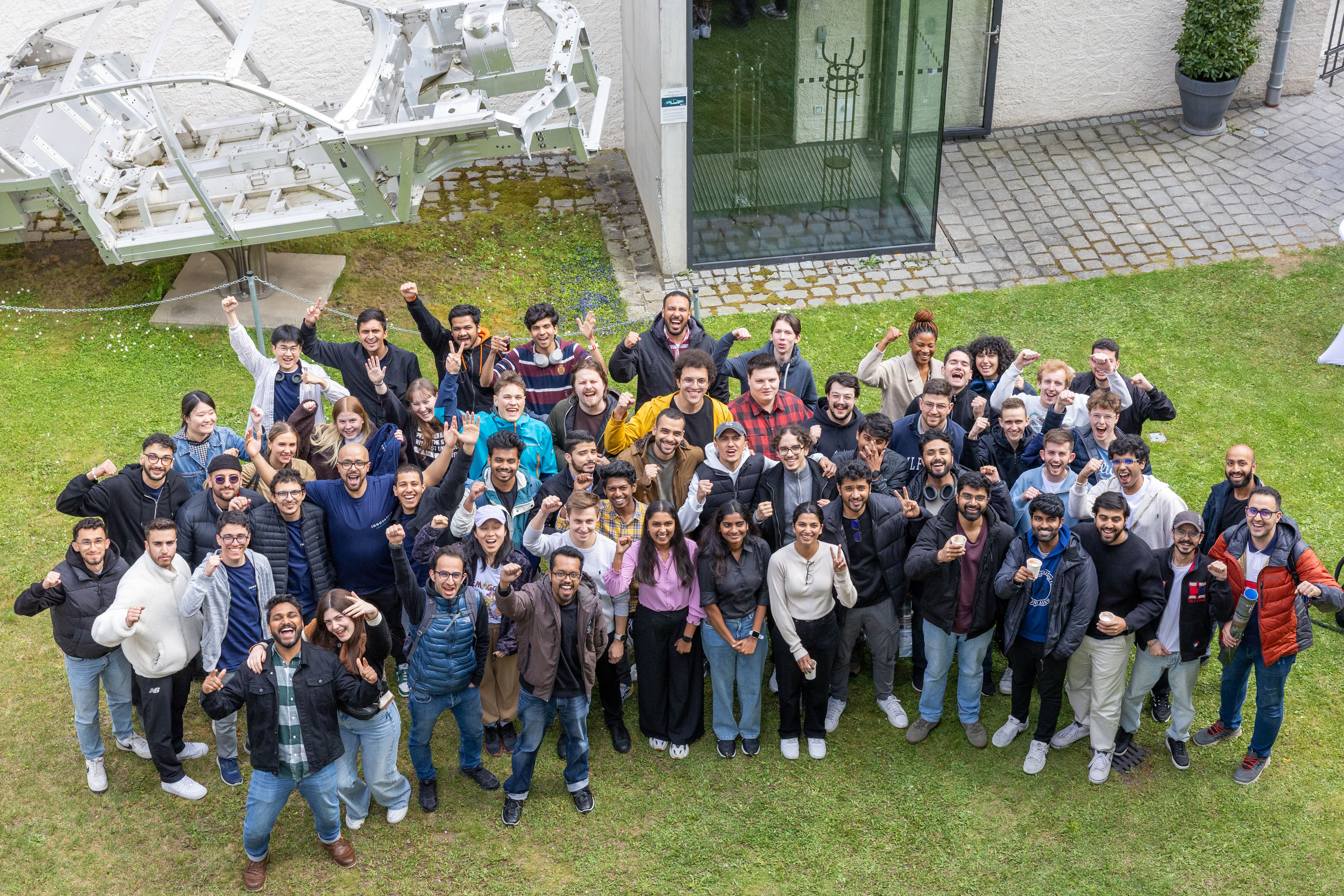
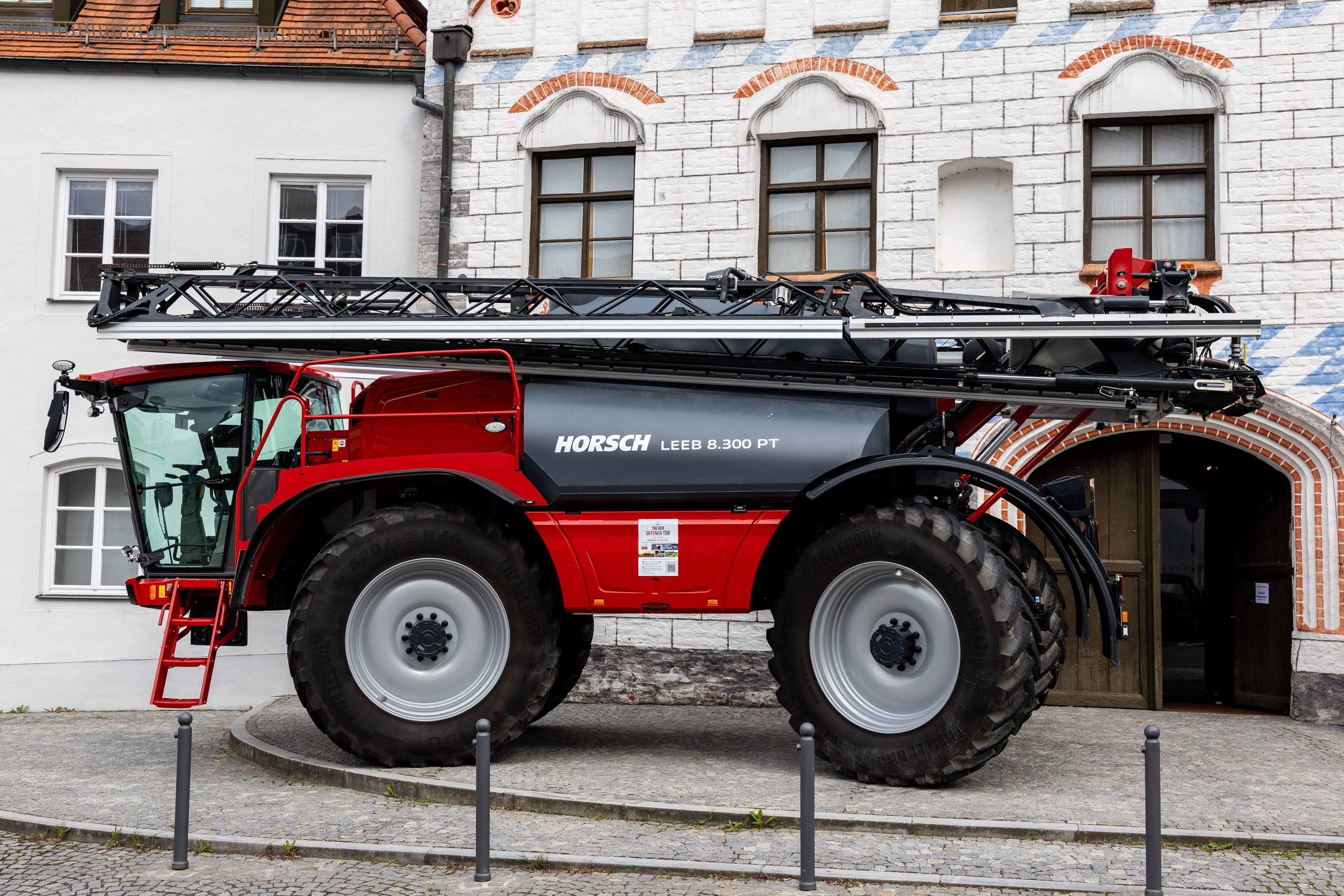
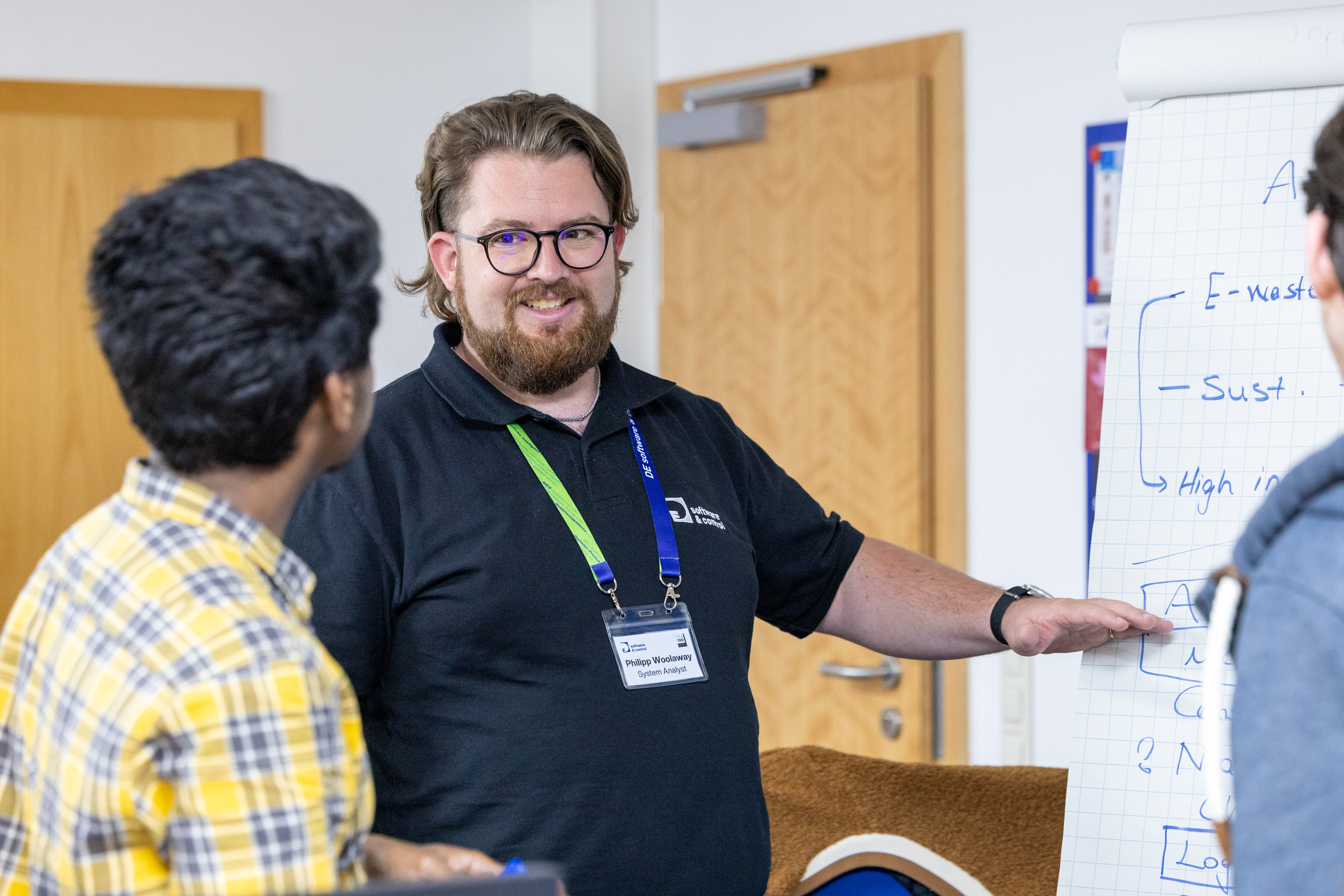
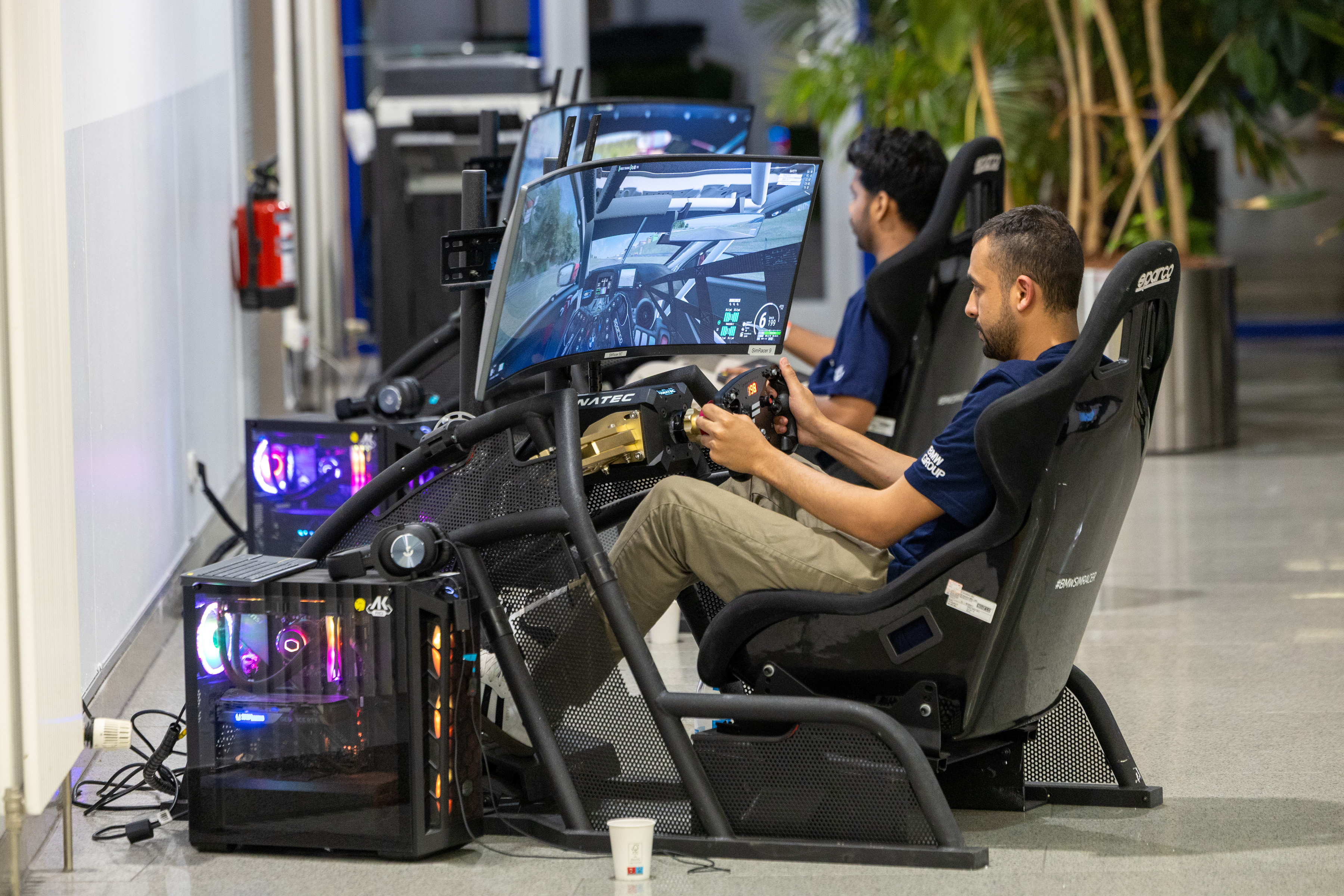
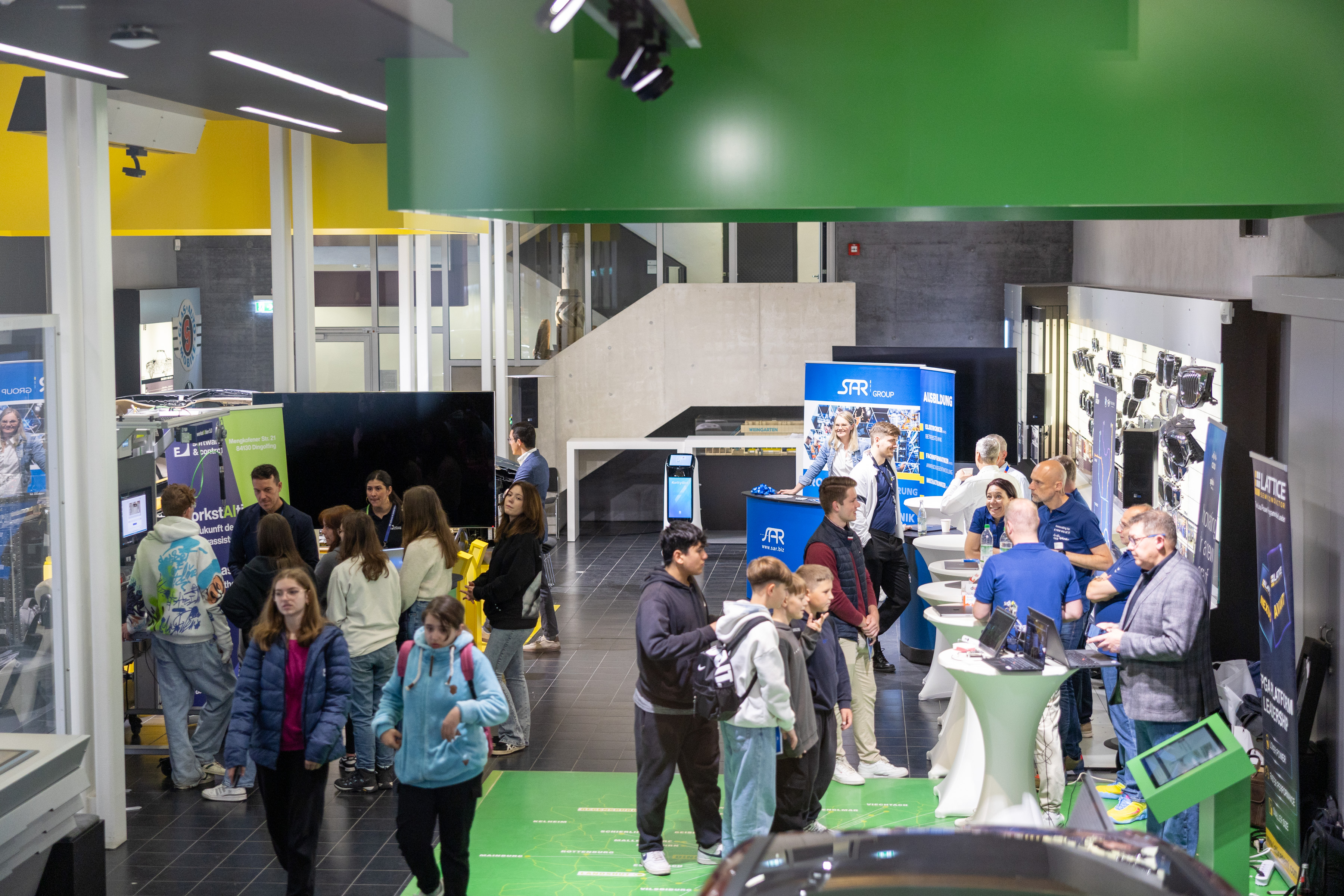
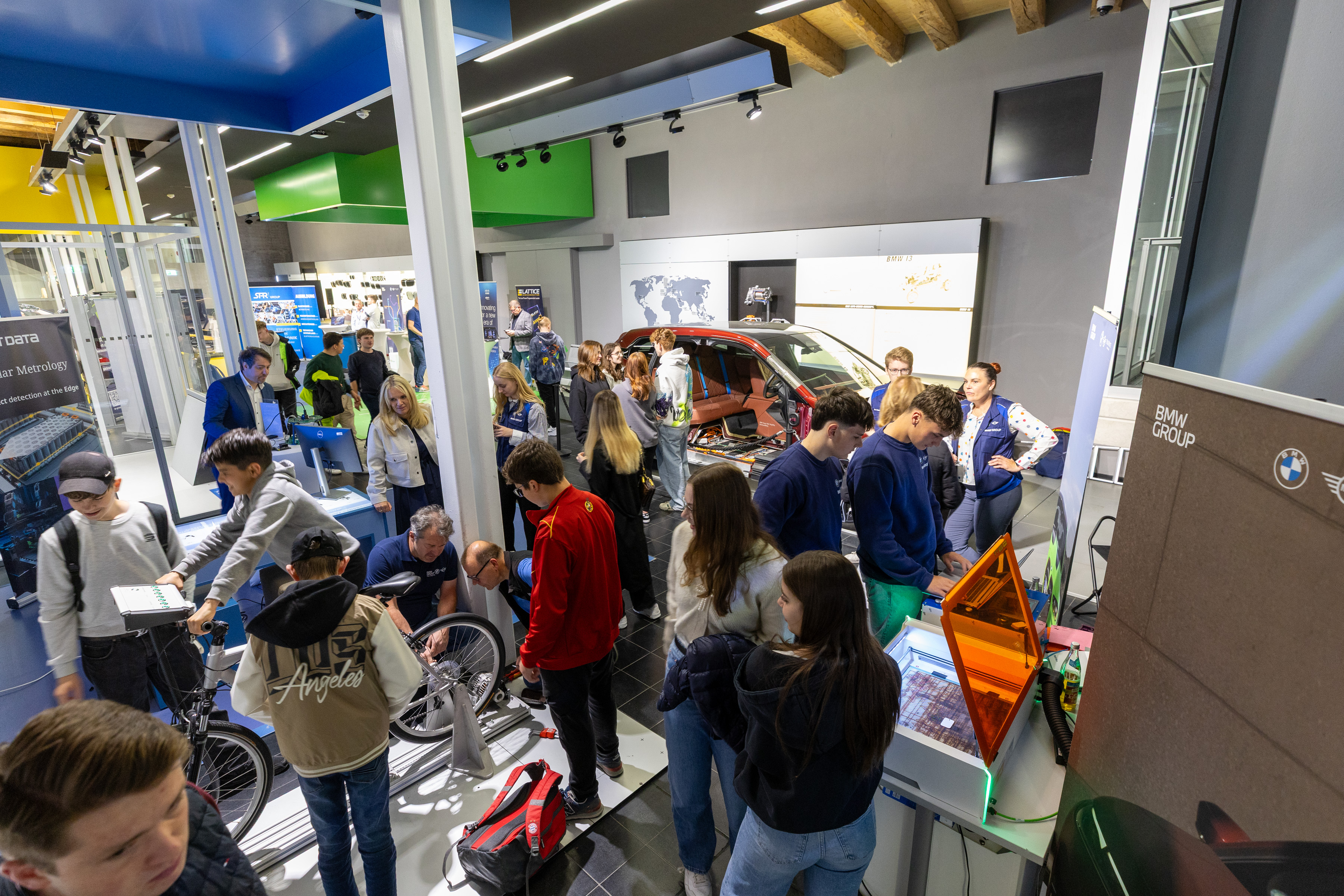
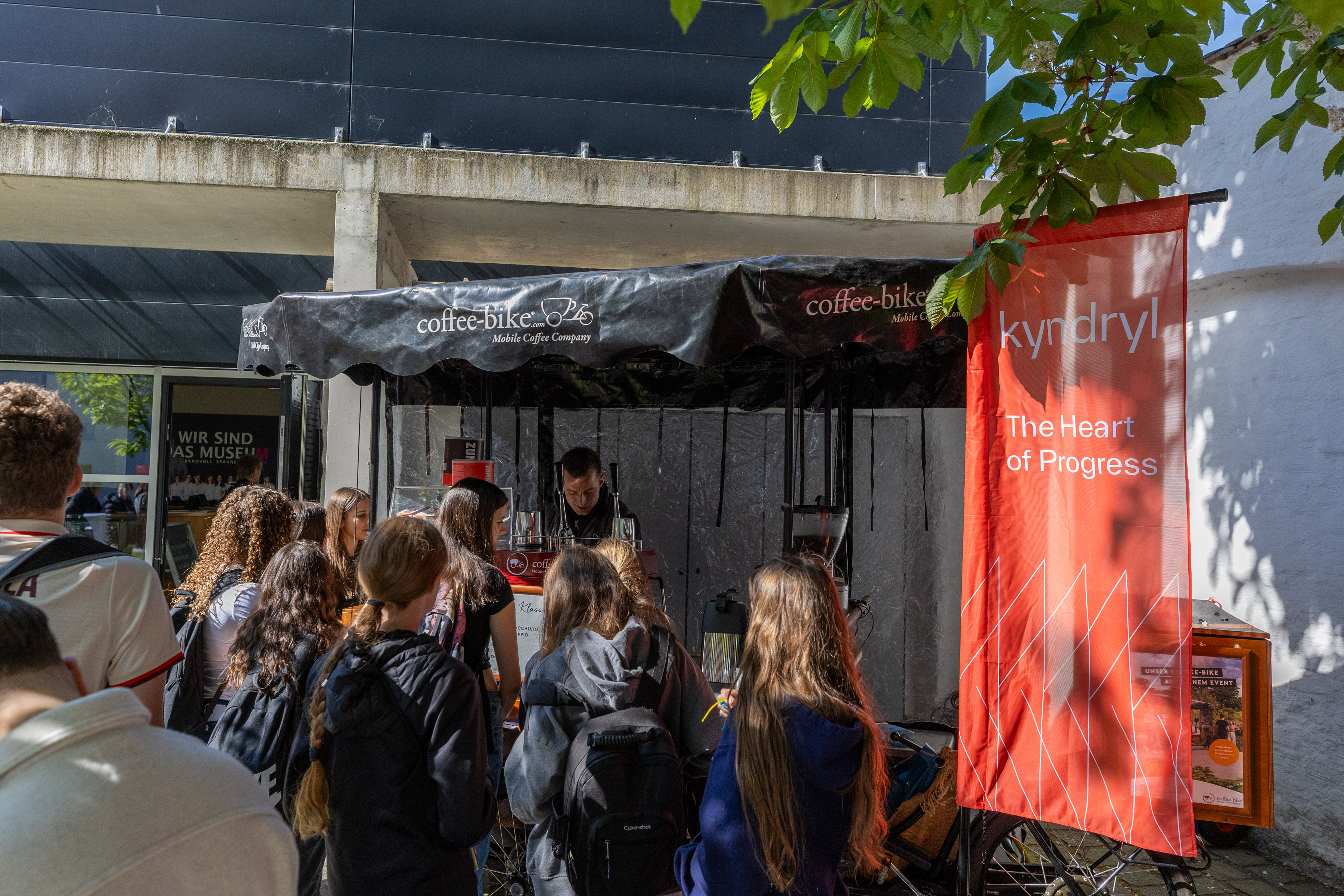
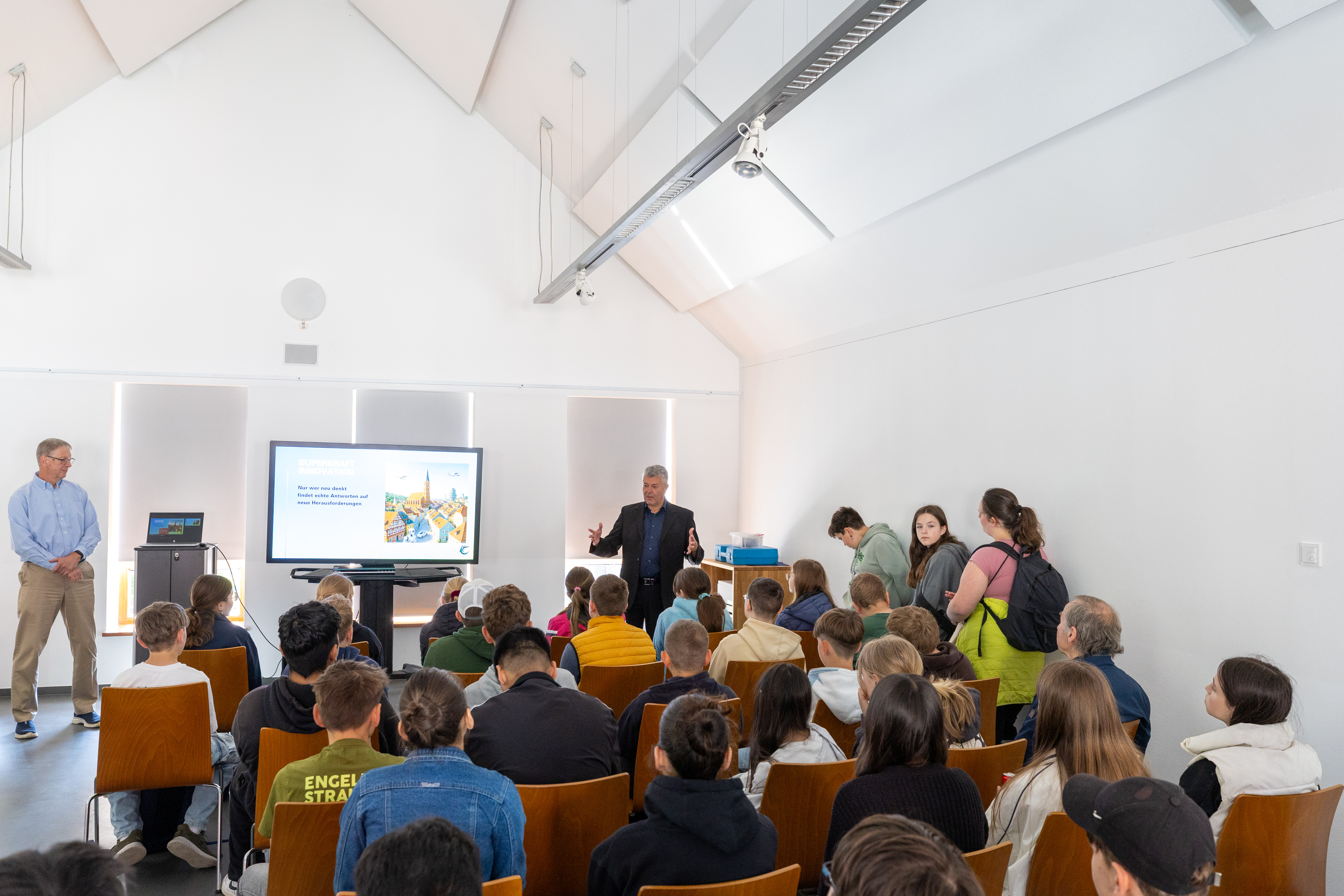
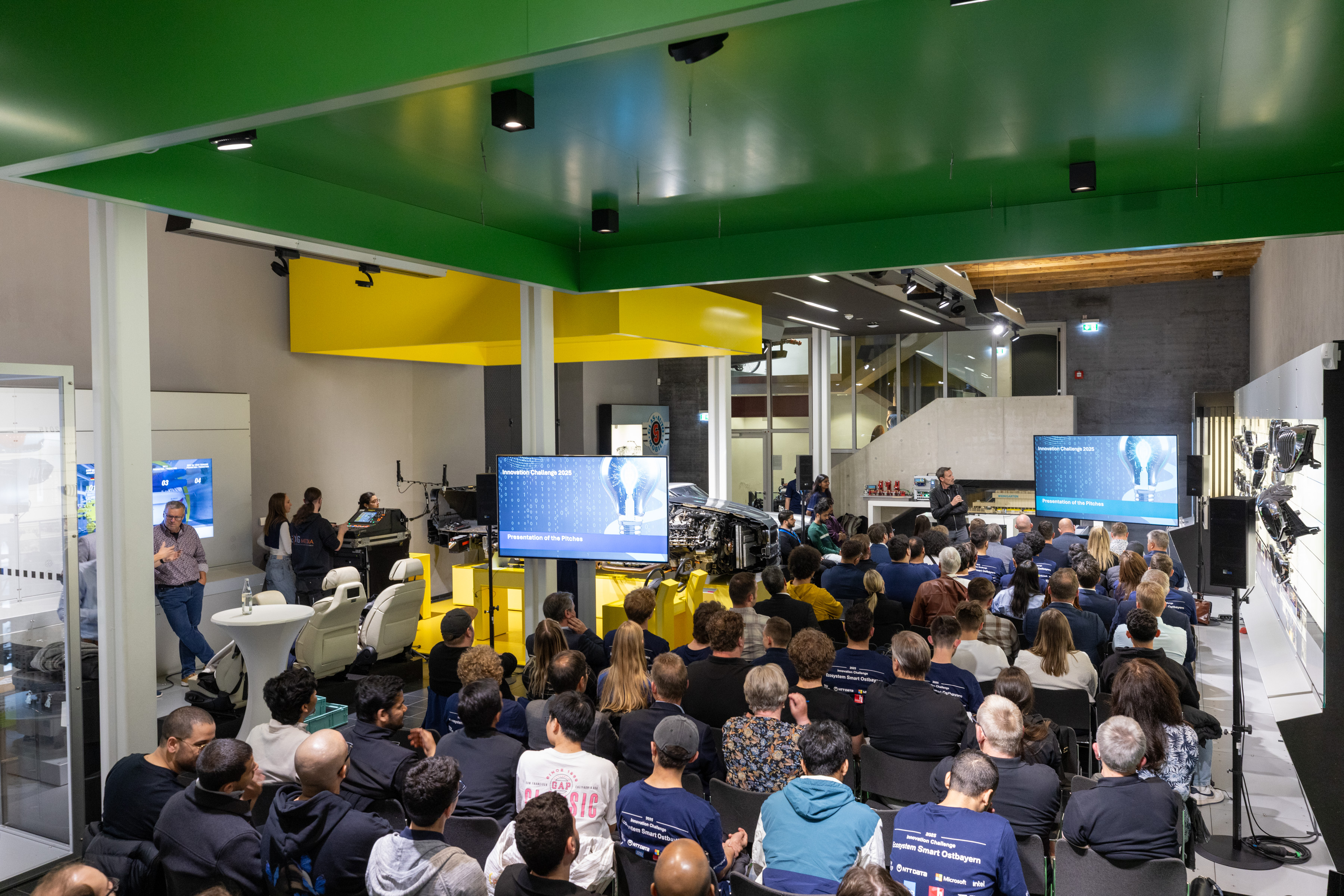
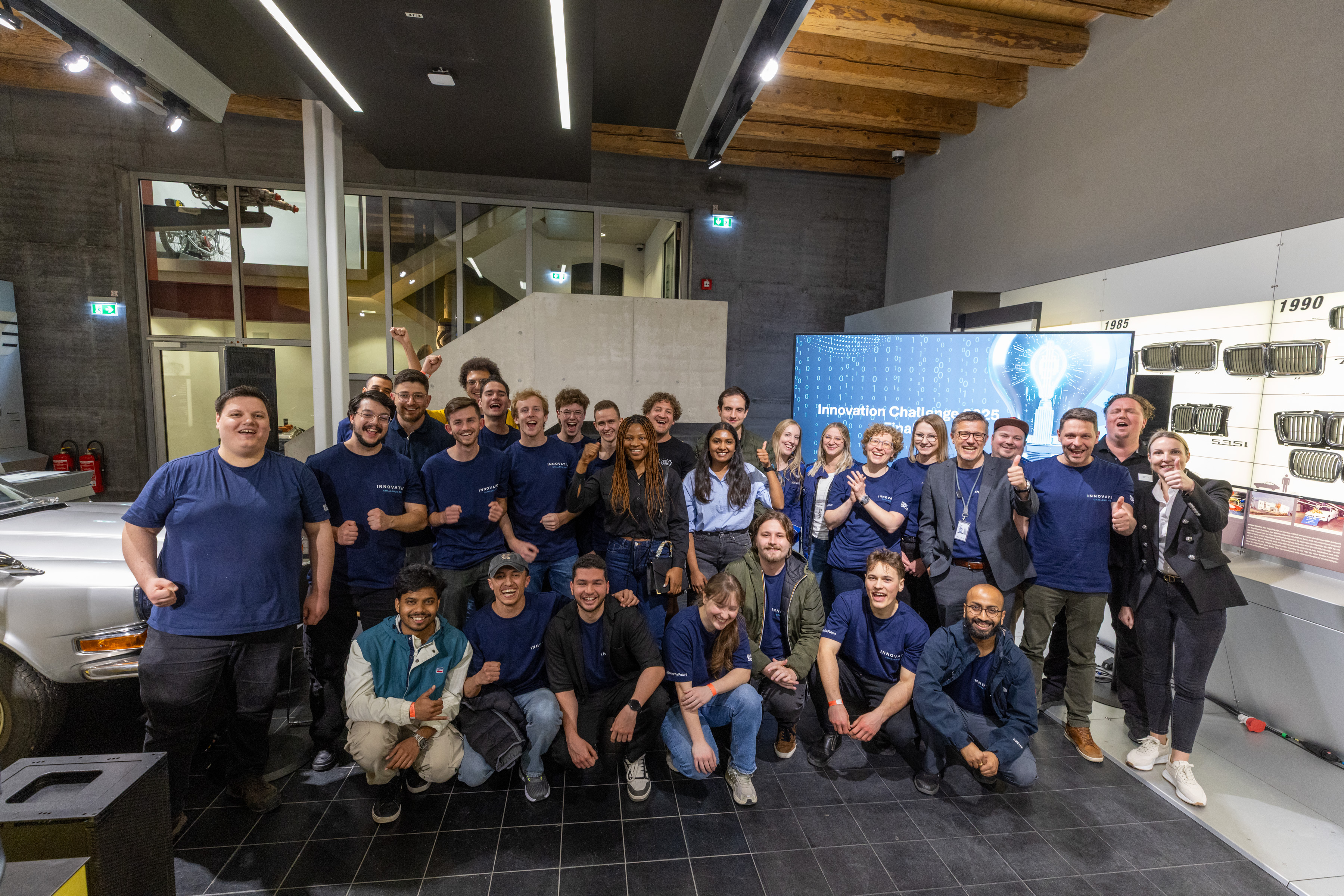
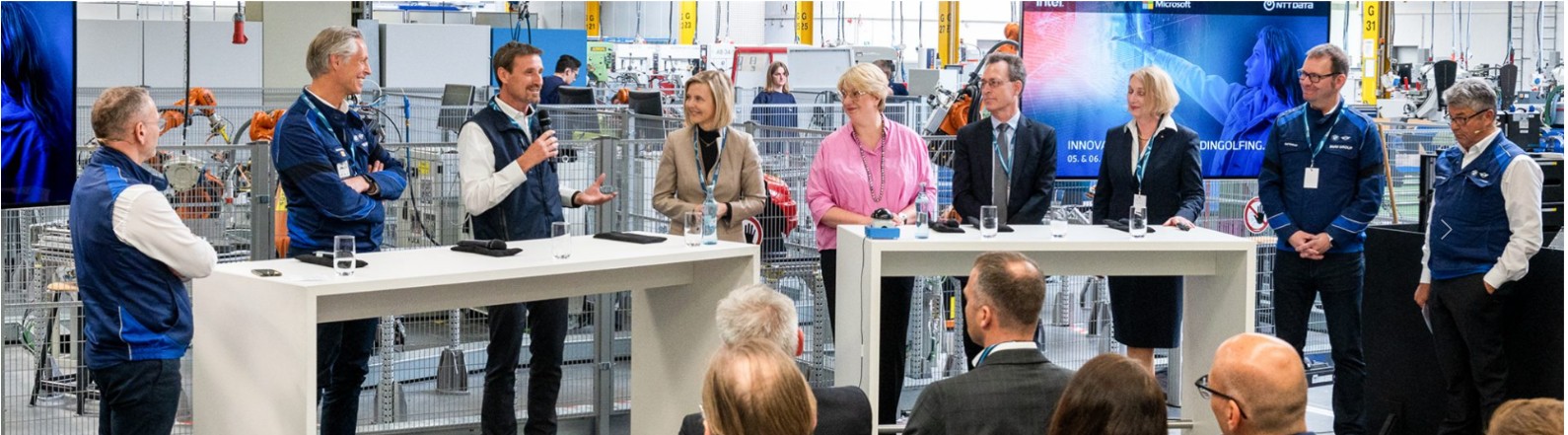
Impressions from the Innovation Challenge 2025

Why participate?
- Gain practical experience by working on real-world challenges
- Connect directly with companies
- Build valuable contacts for your future career
- Gain insights into different industries and companies
- Put your skills and ideas into practice
- Strengthen your portfolio and CV
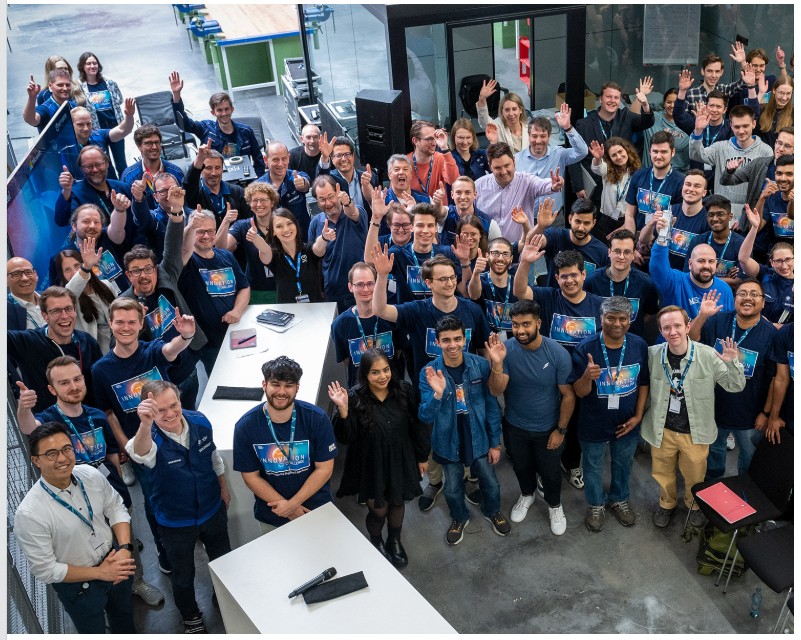
Register now!
When: 08. Okt. 2026 to 10. Okt. 2026
Where: Stadthalle Landau, Stadtgraben 3, 94405 Landau an der Isar
- Due to limited capacity, the number of participants is limited. Secure your place and apply now!
- You can find the descriptions of each use case below. Take a look to see which challenge fits your interests and skills.
Register by 27 September 2026
Not an IT-Nerd? No problem! Whatever you study – please apply. We are looking forward to having various perspectives on our use cases.
Simply complete the survey. Registration will end automatically once all places are filled.
What to expect at our Innovation Challenge

Working on Use Cases
Together with an interdisciplinary team you will work on a real problem in the area of lean, green and digital.
Engaging Supplementary Programme
We will take care of all the sideshow! So you can fully concentrate on your challenge. We provide catering and quiet areas to relax and have a great time – we also end the success of the Innovation Challenge with a joint barbecue.

Innovation
Develop creative and practical solutions for real challenges in the region.
Presentation
Present your results and ideas to a professional jury and partners.
Use Cases
Motivation
Current planning is manuel, time-consuming, error-prone, increased overproduction and food waste.
Target
Approach
- Automated quantity planning and distribution of individual products to relevant Areas, AI-based support, visualization via app with adjustable parameters/scenarios (plant utilization/weather etc.)
Actors/Stakeholders
Business Value
DoD/Success Metrics / KPIs
Distribution of Activities
- 45% Development & programming
- 20% Rule logic & validation (GS91010-2)
- 20% AI integration
- 10% UX/UI design
- 5% Testing & rollout
Technical prerequisites
Candidate profile
Additional information
Motivation
Target
Approach
- Capture DMC; Convert to structured plain text; automated rule-based validation; clear error feedback (position, format, content); Integrate into existing quality workflows; Use AI-supported development
Business Value
DoD/Success Metrics / KPIs
Distribution of Activities
- 45% Development & programming
- 20% Rule logic & validation (GS91010-2)
- 20% AI integration
- 10% UX/UI design
- 5% Testing & rollout
Technical prerequisites
Candidate profile
- Computer Science, Engineering, or similar; Optional: quality / production / traceability knowledge.
Additional information
Motivation
Target
Approach
- Define a constrained voice grammar for goods-receipt commands (article, quantity, bin, batch).
- Build a Progressive Web App (PWA) for headset/smartphone use that captures audio via Azure AI Speech.
- Use Azure OpenAI (GPT-4o) to convert spoken commands into structured JSON postings.
- Connect the PWA via REST API to a mocked SPG Warehouse Suite backend (provided by SPG).
- Implement voice-based confirmation, error correction and a real-time bin-occupancy view.
Actors/Stakeholders
Business Value
DoD/Success Metrics / KPIs
Distribution of Activities
- 50% development and programming (PWA frontend, API integration, prompt engineering)
- 25% AI training and integration (Azure Speech + Azure OpenAI)
- 15% user experience design (voice-flow design, confirmation patterns)
- 10% testing and demo preparation
Technical prerequisites
Candidate profile
- Bachelor or Master students in Computer Science, Software Engineering or related fields. Useful knowledge: web/mobile development (TypeScript, React or similar), basic understanding of REST APIs and cloud services, interest in conversational AI and UX. No prior Azure experience required – enablement will be provided.
Additional information
Motivation
Target
Approach
- From code to reality: Develop smart AI components that transform an existing AMR system into an intelligent SmartCareLogistics platform
Actors/Stakeholders
Business Value
DoD/Success Metrics / KPIs
Distribution of Activities
- 50% development & integration
- 30% testing
- 20% presentation
Technical prerequisites
Candidate profile
- Students in Computer Science, AI, Robotics (Bachelor/Master)
Target
Distribution of Activities
- 30 % development and programming
- 10 % user experience design
- 60% AI training and integration
Technical prerequisites
Candidate profile
- Python, (C++), GIT); Basic AI understanding (e.g. YOLO
Motivation
Target
Approach
- Define a simple tabletop scenario with one object and a target box. Implement object detection, position estimation, coordinate transformation, inverse kinematics, motion planning and grasping. Compare the development effort and results of the simulated and physical implementation.
Actors/Stakeholders
Business Value
DoD/Success Metrics / KPIs
Distribution of Activities
- 60% development and programming
- 35% AI, computer vision and integration
- 5% user experience
Technical prerequisites
Candidate profile
- Advanced Bachelor’s or Master’s students with Python skills and an interest in robotics, computer vision, simulation, inverse kinematics, motion planning or reinforcement learning.
Additional information
Motivation
Target
Approach
- Designing and testing a web-based, all-in-one prototype that structures the microteaching reflection process and integrates
- Flexible video integration: Secure upload and playback of recorded microteaching sessions.
- Custom criteria definition: Users can set their own observation criteria that guide both peer and AI feedback.
- Time-stamped peer feedback: Peers can leave comments linked to specific video moments, aligned with the defined criteria.
- Criterion-based AI analysis: Integration of a generative AI model that uses the video transcript and user-defined criteria to generate structured, criterion-based feedback.
Actors/Stakeholders
Business Value
DoD/Success Metrics / KPIs
Distribution of Activities
- 45% development and programming
- 25% AI integration
- 20% user experience design
- 10% testing
Technical prerequisites
Candidate profile
- Basic WebDevelopment, Software Engineers, Python, Javascript, SQL, UX/UI Design, Background or genuine interest in pedagogical practice and/or educational research
Additional information
Motivation
Target
- Actively assists in creating incident reports and action logs to ensure the capture of complete and structured information.
- Stores this information in a machine-readable format (e.g., based on schema.org or urban data standards).
- Provides role-based user interfaces for citizens, emergency responders, and city planners.
Approach
- During the 24h challenge, a prototype will be developed to address the following core tasks:
- Data Quality: Development of an AI assistant that helps users formulate reports (e.g., "broken street light" or "water pipe burst"), ensuring all relevant fields are filled and information is captured structurally as schema.org-compliant objects.
- Usability: Design and prototypical implementation of UIs tailored to specific actors: an intuitive mobile app for citizens/field workers and an expert dashboard for the central command center.
- Workflow Modeling: Mapping the entire Smart City process – from event generation and AI-supported prioritization/routing to the relevant departments, through to activity documentation and status tracking.
Actors/Stakeholders
- Mobile Task Force: Technicians and service providers handling tasks on-site.
- Central Command Center: Coordinators managing resources and maintaining a city-wide overview.
- Smart Citizens: Engaged residents who want to report issues easily and receive transparent feedback.
Business Value
- Improved response times for critical infrastructure failures.
- High-quality data as a foundation for long-term urban planning (Predictive Maintenance for the city).
- Sustainable preservation and machine-readable preparation of institutional knowledge.
- Increased citizen engagement through transparent, digital feedback loops.
DoD/Success Metrics / KPIs
- Ratio of structured, schema.org-compliant reports vs. unstructured text entries.
- Reduction in processing time due to better initial data capture.
- User satisfaction with the new interfaces (Usability feedback).
- Proof of concept for AI-driven automation (e.g., automated department assignment).
Distribution of Activities
- 35% Development & Backend (Workflows, Data Model, API).
- 35% User Experience & Interface Design (Mockups, Prototyping, Usability Tests).
- 30% AI Integration & Data Modeling (schema.org, Prompt Engineering, Validation).
Technical prerequisites
- AI Platform: Halerium or similar platforms for AI-driven process automation and knowledge management.
- Experience in Prompt Engineering and understanding of AI Agent architectures.
- Use of AI-supported code generation (e.g., Manus, GitHub Copilot, etc.) to accelerate development.
- Experience in responsive UI development (e.g., React, Flutter, or similar).
Candidate profile
- Students/Graduates (Computer Science, Business Informatics, Urban Planning with an IT focus).
- Interest in Cloud Architectures, Smart City technologies, and data standardization.
- Hands-on mentality for rapid prototyping.
Additional information
Motivation
Target
Approach
- The technical implementation shall be designed independently by the student teams. A structured processing chain is expected, in which an incident is first captured and subsequently processed in an automated manner. Relevant information such as type of incident, location, affected utility service, impact, and estimated duration shall be identified and structured for further processing. Based on this information, a communication draft shall be generated automatically. Teams are free to choose their technical approach, including structured forms, rule-based systems, template-driven generation, spe-ech processing, automated text generation mechanisms, or hybrid approaches. The final draft shall be displayed in a user interface for review and approval. After approval, the information shall be transmit-ted to existing communication channels. For prototypical integration with the Heimat-Info-App or exis-ting publication systems, several options are available. These include REST API interfaces, RSS feed integration, or embedding via iFrame technologies. In addition, manual publication via an editorial ba-ckend may also be used. The choice of integration approach is part of the student solution design.
Actors/Stakeholders
Business Value
DoD/Success Metrics / KPIs
Distribution of Activities
Technical prerequisites
Candidate profile
- This use case targets students in Computer Science, Business Informatics, Data Science, or related fields. Useful skills include software development, web or application development, APIs, data proces-sing, and a basic understanding of digital process automation and modern system architectures. Fa-miliarity with UX/UI design and cloud-based systems is beneficial but not mandatory.
Additional information
Motivation
Target
Approach
- Build an AI assistant that turns one short administrative input into ready‑to‑publish multi‑channel content, including text and simple branded visuals.
Distribution of Activities
- 35% AI Integration & Prompt Engineering
- 30% Frontend & UX
- 20% SharePic Generator
- 15% Content, Testing & Presentation
Technical prerequisites
- LLM API (OpenAI, Claude, or similar)
- Web Stack: HTML, CSS, JavaScript, or React
- PDF Processing (PDF.js or Python)
- Graphics Generation (HTML Canvas, html2canvas, or Image API)
- Optional Azure Services: Azure OpenAI, Azure App Service, Azure Blob Storage
- Optional Integration with the Municipal Software & AI Platform Ayunis
Motivation
- new funding programs
- economic developments
- investments and company expansions
- business relocations and settlements
- industry trends
- workforce and skills-related topics
- energy and transformation issues
- public discussions and emerging regional topics
Target
The system should automatically collect, analyze, prioritize and present publicly available information in a clear and understandable way.
The objective is to generate a digital Economic Journal on a regular basis – ideally every month – summarizing current economic developments, relevant funding opportunities, opportunities and risks, industry trends, and significant regional business events for the economic development agency.
In addition, the system should derive concrete and prioritized recommendations for action based on the insights generated. Ideally, these recommendations should be based on economic indicators, regional structural data, current developments, and scientifically sound analytical and evaluation methods.
The goal is to help identify opportunities at an early stage, make risks more visible, and support strategic decision-making through data-driven insights and evidence-based recommendations.
Approach
- Development of an intelligent research and analytics system that automatically evaluates various information sources and generates economically relevant insights.
- Funding Program Monitoring - Identification of new funding programs, - Analysis of changes to existing programs, - Assessment of relevance for companies within the district
- Economic Intelligence Radar - Detection of investments, - Company developments, - Business expansions, - Corporate anniversaries, - Workforce and employment developments, - Public discussions and emerging topics, - Economic and industry trends, - Regional structural and economic data
- AI-Powered Economic Journal Automated generation of a report containing: - the most important developments from the previous reporting period, - relevant funding opportunities, - regional trends, - opportunities and risks, - prioritized recommendations for action
- Based on the insights generated, the AI should derive concrete recommendations for the Economic Development Agency. Examples include: - proactively informing companies about relevant funding, - opportunities recommending direct outreach to companies planning investments or expansions, - suggesting new event formats or support initiatives, identifying and highlighting emerging industry developments, - detecting support needs and economic challenges at an early stage, - identifying strategic opportunities and risks for the regional economy. The ultimate goal is not only to collect and summarize information, but to transform data into actionable intelligence that supports evidence-based decision-making and proactive economic development.
Actors/Stakeholders
- Economic Development Agency of the District of Dingolfing-Landau
- Companies and businesses
- Investors
- Start-ups and entrepreneurs
- Municipalities
- Chambers and business associations (e.g. Chamber of Industry and Commerce – IHK, Chamber of Skilled Crafts – HWK)
- Regional network partners
Business Value
- Reduction of manual research efforts
- Better overview of economic developments
- Early identification of relevant trends and opportunities
- More informed and evidence-based decision-making
- Increased ability to act proactively
- More targeted and audience-specific communication
- Faster access to relevant funding opportunities
- Better visibility of regional support services and programs,
- Earlier awareness of economic opportunities and market developments
- Targeted communication and knowledge transfer tailored to specific needs and industries
- Increased regional competitiveness
- Improved networking and integration of economically relevant information
- Reduction of information overload through intelligent prioritization of relevant content
- Stronger innovation capacity and regional development
- Enhanced attractiveness as a business and investment location
DoD/Success Metrics / KPIs
- Reduction in research and information-gathering time
- Number of funding opportunities identified
- Number of economic developments detected
- Quality and relevance of generated recommendations for action
- User satisfaction
- Number of regularly generated reports
- Number of measures, initiatives or activities triggered by the generated insights
Distribution of Activities
- 35% Artificial Intelligence & Data Analytics
- 25% Data Research & Data Integration
- 20% Software Development
- 10% UX/UI Design & Data Visualization
- 10% Business Concept & Presentation
Technical prerequisites
- Artificial Intelligence (AI)
- Data Science
- Information Management
- Web Scraping & Data Integration
- Software Development
- Business Informatics
- Business Intelligence
Additional information
Funding Programs - Federal Funding Portal (Förderzentrale des Bundes), - Bayern Innovativ, - Funding programs provided by the European Union, the Federal Government and the State of Bavaria
Economic Developments - Regional newspapers and local media, - National and international media sources, LinkedIn, - Corporate websites, Press releases, - NiWi – the IHK business magazine, - Chamber of Industry and Commerce (IHK) Lower Bavaria, - Chamber of Skilled Crafts (HWK) Lower Bavaria–Upper Palatinate
Structural and Economic Data - IHK location and business statistics, Statistics Bavaria, Federal Employment Agency (Bundesagentur für Arbeit), Regional economic databases, Open Data portals
Regional Information Municipal websites, District business registry and company database (KWIS, potentially using anonymized sample data), Press portals, Economic and business news sources
*In addition to publicly available sources, the Economic Development Agency can provide insights into established research processes, commonly used platforms and relevant information channels that have proven valuable in daily economic development practice.
Motivation
In industrial settings, detailed CAD data of factory environments is typically available; however, this data often lacks physical attributes. Assigning appropriate physical parameters to these datasets is time-consuming, costly, error-prone, and highly repetitive.
Target
Approach
- Python (within NVIDIA Isaac Sim)
- Visual Studio Code
- On-premise AI models (no proprietary CAD data will be uploaded to external cloud services)
Distribution of Activities
Motivation
Target
Approach
- Curate a sample corpus of public regulatory documents (BaFin, MaRisk, EBA) as the demo dataset.
- Build an ingestion pipeline (PDF parsing via Azure AI Document Intelligence, chunking, embedding) and index in Azure AI Search (vector + hybrid).
- Implement two RAG variants in parallel: (A) Managed – Azure OpenAI Service (GPT-4o) inside the customer’s Azure tenant via Private Endpoint; (B) Self-hosted – open-source LLM (e.g. Llama 3.3 70B or Mixtral 8x22B) deployed on Azure ML Managed Online Endpoints or AKS with GPU nodes in the customer’s tenant. Model weights live on tenant-controlled storage.
- Develop a chat-style web UI with source highlighting, confidence indicator and audit trail.
- Benchmark both variants on the same evaluation set: answer accuracy, latency, cost per 1k queries, regulatory posture (where do weights run, where does data flow, AVV implications).
- Document the decision matrix “Managed vs. Self-hosted” as guidance for regulated industries.
Actors/Stakeholders
Business Value
DoD/Success Metrics / KPIs
Distribution of Activities
- 40% development and programming (ingestion pipeline, RAG backend, chat UI)
- 30% AI training and integration (deployment of open-source LLM, prompt engineering, retrieval tuning, benchmark)
- 15% architecture and security documentation (private-deployment story, AVV/MaRisk angle)
- 15% user experience design (citation display, audit trail, comparison view).
Technical prerequisites
Additional information
Candidate profile: Bachelor or Master students in Computer Science, Data Science or Information Systems. Useful knowledge: Python, basic NLP/LLM concepts, web development, interest in regulatory/compliance topics and cloud architecture. Prior exposure to vector search, RAG or model deployment (Hugging Face, vLLM) is a plus but not required – enablement will be provided.
Motivation
This use case is intentionally open-ended: the goal is not a finished product, but innovative, practical AI-driven concepts that help cities plan, manage, and optimize large events. The main focus is the analysis, prediction, and optimization of visitor flows.
Target
Approach
- Possible solutions: Dashboard, heatmaps, digital twin, real-time monitoring, simulation, visitor assistant.
- Data sources: Historical visitor data, previous visitor tracking, safety data, traffic/parking data, weather, event data, geodata, sensors, anonymized camera or WLAN/Bluetooth data.
- AI components: Forecasting, anomaly detection, pattern recognition, simulation, recommendations.
- Creativity, practicality, and modern technologies; teams are encouraged to go beyond the listed examples.
DoD/Success Metrics / KPIs
Technical prerequisites
Candidate profile
- Students or young professionals in software, AI, data science, geodata, web, or UX/UI
Motivation
Target
Approach
- Compare data with historical, seasonal and regional benchmarks.
- Use AI- or rule-based anomaly scoring; provide heatmaps and dashboards.
- Data Sources: Anonymized electricity, gas and water consumption; PV feed-in; weather and solar data; asset and fault reports.
Business Value
Expected Impact: Lower costs and CO₂ emissions, earlier detection of defects or leaks, and greater transparency on regional consumption trends.
Motivation
Target
Approach
- Identify use cases; define user journeys and a feature roadmap; create wireframes or a clickable prototype.
- Data Sources: consumption, generation and billing data; customer account data; service notifications and local information.
Business Value
Expected Impact: Faster access to information, higher service quality, greater transparency on consumption and bills, and closer customer relationships.
Motivation
Target
- Personal references
- Allergies, intolerances, dietary requirements and diets
- Reduction of food waste/ Improving sustainability
- Operational efficiency/ Support
Approach
- This use case explores how AI can support the kitchen team and the staff in the care facilities by generating optimized meal plans that improve efficiency, reduce food waste and ensure high-quality (costs – sustainability – digitalisation – satisfied residents)
Actors/Stakeholders
Business Value
DoD/Success Metrics / KPIs
- Reduced time required for menu planning
- Meal plans remain within predefined budget limits
- Estimated reduction in food waste compared to current planning process
- All resident requirements correctly consideres und adaptable
- AI generates a complete weekly meal plan automatically
Technical prerequisites
Motivation
Target
- understands challenges
- generates hypotheses
- proposes experiments
- analyzes outcomes
- recommends actions
Approach
- During the 24h challenge, a prototype will be developed to address the following core tasks:
- Describe the problem (e.g.skills shortage, youth out-migration, lack of startup culture, weak innovation capacity in SMEs, low citizen participation, or unattractive downtown areas)
- Formulate a hypothesis (e.g.“Students are more likely to remain in the region if they participate in innovation projects during school.”)
- Derive metrics (e.g.including regional contacts, internships, project-based assignments, and post-graduation retention rates)
- Develop an experiment and visualize results (e.g.comparing two student groups over a defined period through dashboards, key metrics and action recommendations)
Actors/Stakeholders
- Localauthoritydistrict(Mayors, City administrations, Economic development agencies)
- Companies (Executive management, Innovation managers, Human resources managers)
- Educational institutions(Schools, Colleges and Universities, Educationalfacilitiesund trainingcenters)
- Regional Networks (Niederbayern Forum, Ecosystem Niederbayern)
- Politics (Local politics, Regional funding agencies)
Business Value
- learn faster from their initiatives
- make better-informed decisions
- allocate resources more effectively
- drive innovation in a targeted way and avoid costly failed investments
DoD/Success Metrics / KPIs
- Relevance (Does the solution address a significant regional challenge?)
- Quality of Hypothesis Formulation (Can the application derive a testable hypothesis from a problem statement in a clear and accessible way?)
- Quality of Measurability (Are suitable metrics and measurement methods proposed?)
- Degree of Innovation (Does the solution provide a novel perspective on smart cities or smart regions?)
- Use of AI (Is AI effectively utilized to support learning and decision-making?)
- User Experience (Is the solution intuitive and usable for non-technical users?)
Technical prerequisites
- AI Platform: Halerium or similar platforms for AI-driven process automation and knowledge management.
- Experience in Prompt Engineering and understanding of AI Agent architectures.
- Use of AI-supported code generation (e.g., Manus, GitHub Copilot, Claude Code, etc.) to accelerate development.
- Experience in responsive UI development (e.g., React, Flutter, or similar).
Candidate profile
- Students/Graduates (Computer Science, Economics, Social Sciences, Public Administration, Psychology, Education), Programming skills are helpful, but not required
- Candidates are characterized by: Curiosity, Creativity, Analytical thinking, Interest in social issues